
What Does Estate Clearing Cost, and What Affects the Price
One of the most common questions is: what does this cost? The honest answer is that it depends on the situation — but here we explain exactly what makes up the price, so you can judge your own case.
It’s hard to name a price without knowing the situation, but that doesn’t mean pricing is vague or arbitrary. A fixed, written quote is always provided before you commit to anything — here’s what goes into it. See also our full overview: What does estate clearing cost?
The factors that affect price the most
1. Size of the home
The single biggest factor is the size of the space being cleared. A one-bedroom flat is quicker — and therefore cheaper — to clear than a large, multi-room flat or a detached house.
2. Amount and type of belongings
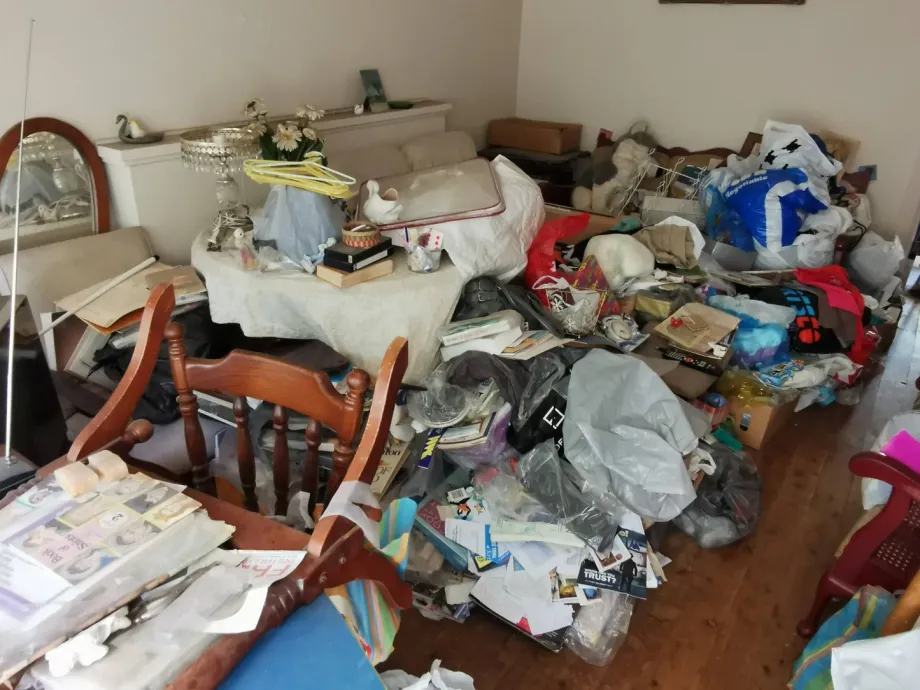
The price for two similarly sized homes can vary considerably depending on how much is inside. Belongings accumulated over decades — especially if they include a lot of large furniture or heavy items — take more work than a sparsely furnished home.
3. Whether a final clean is needed
Many people also book a final clean alongside the clearing, so the home is immediately ready for sale or rent. This adds to the price, but saves you arranging a separate cleaning step.
4. Access to the space
A walk-up building with no lift, a narrow stairwell, or a hard-to-reach attic or cellar all increase the time needed, since carrying items out simply takes longer. This is factored into the quote.
5. Waste requiring special handling
If the home contains, for example, hazardous waste, a large amount of electronics, or other items needing special handling, this affects the price because it needs its own disposal route. Read more in our article on disposing of electronics and hazardous waste.
How the price is actually built up
We don’t use a fixed price table, because two seemingly similar homes can require completely different amounts of work. Instead:
- You tell us the size of the home, the city, a rough estimate of the amount of belongings, and any timeline
- We give a preliminary estimate within 24 hours
- We confirm a fixed quote before work begins — after a brief site visit if needed
- The quote covers everything agreed: clearing, recycling, and any final clean
How saleable items affect the final price
If the home contains more valuable, saleable items, the proceeds can, as agreed, either be:
- Credited directly against the clearing quote, or
- Accounted for separately and documented to the estate
Neither approach is “more correct” than the other — it’s about whatever suits your situation and the estate’s administration best.
Checklist before requesting a quote
Gathering this information in advance speeds up getting a quote:
- The home’s floor area and number of rooms
- A rough estimate of the amount of belongings (little / moderate / a lot)
- Whether the building has a lift, or items need to be carried down stairs
- Whether a final clean is needed in addition to the clearing
- Whether there’s a known deadline the space needs to be empty by
- Whether the home contains waste needing special handling (e.g. construction debris, chemicals)
Why we don’t publish fixed price lists
Many companies publish “from” prices that rarely hold up in the real situation. We’d rather give you an accurate, fixed quote based on your actual circumstances than an unrealistic starting price that would change after a site visit anyway.
If you’d like to know how the whole process unfolds once a quote is accepted, also read estate clearing step by step.