
Disposing of Electronics, Hazardous Waste and Special Waste the Right Way
Almost every home clearing turns up something that simply cannot go in with the mixed waste. Here's what counts as hazardous or special waste, and how it should be handled safely.
When a home is cleared — whether it’s an estate, a move, or belongings that have built up over the years — most of what’s found is ordinary: furniture, clothes, dishes, books. But almost every home also has something that shouldn’t, and legally can’t, go in with the general waste. This article covers what those special cases are and how to handle them sensibly and safely.
Why it matters
Hazardous waste and electronics don’t belong with mixed waste for two reasons. First, much of it contains substances that can harm the environment or health if it ends up in the wrong place — heavy metals in batteries, for instance, or solvents in old paint. Second, a large share of electronics contains valuable, recyclable materials that can be reused if handled correctly. Sorting waste properly from the start avoids both environmental harm and needless waste of usable material.
What counts as hazardous or special waste
During a home clearing, the following categories typically turn up and need special handling:
- Electrical and electronic equipment (WEEE): televisions, computers, appliances, phones, charging cables, small electronics
- Batteries and accumulators: batteries of every size, batteries from portable devices, old power-tool batteries
- Lighting and lamps: fluorescent tubes, energy-saving bulbs, LED fixtures
- Paint, solvents and adhesives: opened or old tins from a garage, cellar or storage unit
- Chemicals: cleaning products, plant protection products, insecticides
- Medicines: expired or unused medication
- Smoke alarms: often contain a small amount of radioactive material and need separate collection
If you’re unsure about a particular item, it’s always better to ask than to guess — especially with an old container whose contents no one recognises any more.
How disposal actually works
1. Identification and sorting on site
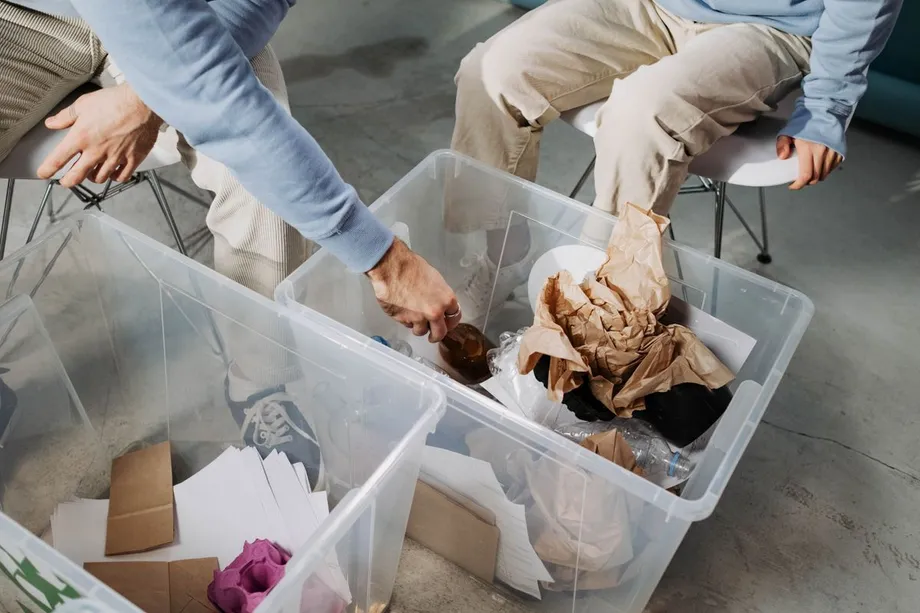
When we clear a home, we go through every space systematically and set anything classed as hazardous or special waste aside as its own batch during the clearing itself. That way it never accidentally ends up mixed in with the rest.
2. Safe transport
Hazardous waste is transported separately from other items, properly packaged, so that broken batteries or open liquids can’t leak in transit.
3. Delivery to the correct facility
Different waste types go to different places: electronics to their own recycling stream, hazardous chemicals to a separate collection point, and so on. This ensures the material is properly handled instead of, say, ending up at an ordinary landfill.
4. Documentation on request
Especially for estate clearings or housing-company jobs, it can be useful to document where items ended up. We can provide a disposal summary when it’s requested.
Checklist: places to check before a clearing
- Kitchen cabinets: old cleaning products and dishwasher detergent
- Bathroom cabinet: medicines, cosmetics, old battery-powered devices
- Garage or storage unit: paint, solvents, batteries, plant protection products
- Home office or attic: old electronics, cables, chargers
- Throughout the home: smoke alarms, remote controls and other battery-powered small items
Why it pays to let a professional handle this part
Identifying and properly handling hazardous waste takes care, and it’s not something to leave to last-minute guesswork — especially in a home that’s been lived in for decades, where cupboards can hold things no one remembers putting there. When you let a professional handle the whole clearing, both ordinary and special waste end up in the right place without you having to work out the fate of every single item yourself.
If you only need items removed and recycled without a full home clearing, see our removal and recycling service. If it’s a complete clearing of a loved one’s home you need, read more about estate clearing.
Properly handled disposal isn’t just an obligation — it’s a way of making sure the things leaving a home either get a new life or are handled in a way that doesn’t burden the environment needlessly.