
Donate or Discard? How to Sort Belongings Sustainably During a Clearing
Every home clearing raises the same question: what's worth passing on, and what's best recycled or discarded? Here's how to make that call sensibly and responsibly.
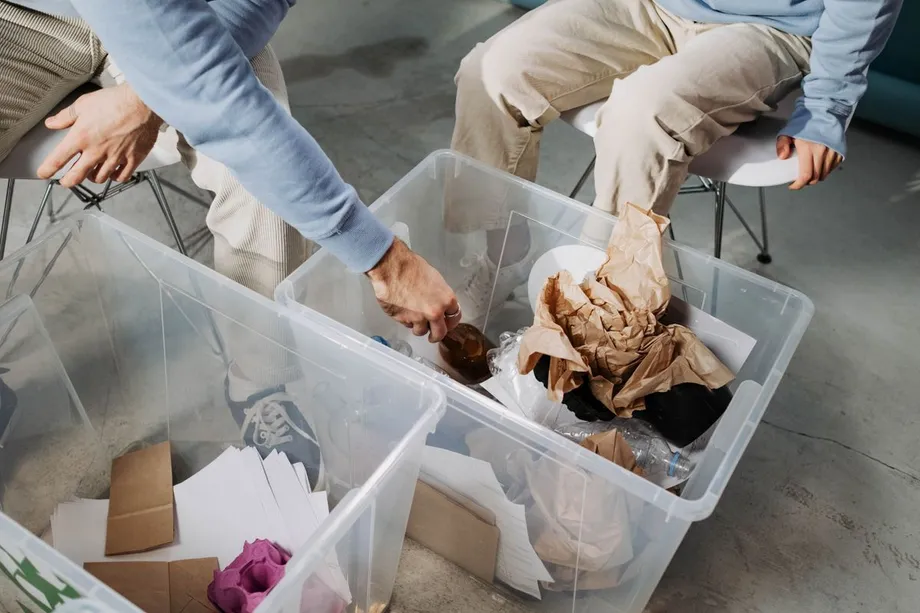
Clearing a home inevitably raises the same question item by item: keep, sell, donate, recycle, or discard? The line between donating and discarding often feels the hardest to draw — you don’t want to throw anything away needlessly, but you also don’t want to burden a charity with things no one will actually use. This article covers how to make that call practically and sustainably.
Why “donate everything” isn’t a good default
Many people assume donating is always better than discarding. In reality, charities and recycling centres constantly receive items they can’t accept — broken, dirty, outdated, or simply not in demand. Handling and disposing of that costs charities time and money that would otherwise go to their actual work. This is sometimes called “wishcycling” — donating in good faith, but really just shifting the responsibility onward.
A sustainable clearing means directing every item to where it will genuinely be useful.
How to judge an item’s fate
First, ask: is it in usable condition?
If something is broken, dirty, or clearly worn out, it usually isn’t right for donation — however good the intention feels. Items like that are better sent straight to recycling or proper disposal.
Then ask: is there demand for it?
Even a usable item doesn’t always work as a donation if there’s no demand for it. Old televisions, certain furniture, or a large quantity of the same item can be hard for a charity to accept even in good condition.
Finally: what’s a realistic amount?
When clearing an entire home, the volume of donation-worthy items can exceed what any single charity can take at once. It helps to prioritise — decide what’s most valuable to donate, and let the rest go straight to recycling without losing anything of real value.
Checklist: donate, recycle, or discard
Donate if:
- the item is intact and clean
- there’s likely demand for it (clothing, dishes, books, small furniture)
- you wouldn’t hesitate to use it yourself in its current condition
Recycle if:
- the material (metal, textile, wood, glass) can be recovered even though the item no longer works
- it’s electronics that need separate collection regardless
- it’s worn but not hazardous
Dispose of properly if:
- it’s broken and can’t reasonably be repaired
- it’s hazardous waste, like chemicals or batteries (see our article on disposing of electronics and hazardous waste)
- it’s too dirty or deteriorated to be accepted as a donation any longer
Where donated items actually end up
Donated items typically go either straight back into reuse (flea markets, charity shops) or into targeted aid work. Some are resold, with proceeds funding the organisation’s work. Material sent for recycling, meanwhile, is broken down into raw materials that can be used to make new products.
Why it pays to let professionals handle the sorting
When an entire home needs clearing, there’s often too much to sort item by item on your own time and energy — especially when the situation is already difficult. We go through belongings systematically and direct each batch to the right place: donation-worthy items passed on, recyclable material recycled, and the rest disposed of properly.
If you only need items removed and recycled, see our removal and recycling service. If it’s a larger job — clearing an entire home — read more about apartment clearing.
Responsible clearing doesn’t mean donating everything — it means making sure every item ends up somewhere it will genuinely be of use.