
Checklist for an Estate Beneficiary: What to Handle and in What Order
After the death of a loved one, a long list of practical matters awaits, and no one has the energy to think through all of it at once. Here's a clear, step-by-step checklist to help you see what needs handling and in what order.
After the death of a loved one, there’s a long list of practical matters you’ve likely never had to think about before. This checklist doesn’t replace advice from a lawyer or estate administrator, but it helps you see the general order things tend to follow — one that clearing the home fits naturally into.
1. The first formal steps
- Obtaining a death certificate and having the population register updated
- Arranging the funeral
- Notifying banks, insurance companies, and other institutions of the death
- Redirecting mail to another address if needed
2. Preparing for the estate inventory
The estate inventory (perunkirjoitus) is where the deceased’s assets and debts are formally recorded. This requires, among other things:
- A record of heirs (often handled by an estate administrator or lawyer)
- An asset list: bank accounts, securities, property, belongings
- Any debts and their supporting documents
If you’d like to understand how the estate inventory and clearing the home relate to each other, see our article on the estate inventory and clearing.
3. Going through the home and setting aside valuables
Before anything is removed, it’s worth carefully going through valuables, jewellery, and important documents — either yourself or through the clearing service. We cover this in more detail in our article on handling valuables and documents.
4. A joint decision to clear the home
Once all beneficiaries agree the home can be cleared, it’s worth agreeing on:
- Who acts as the point of contact for the clearing service
- Whether anything absolutely must be kept before clearing begins
- Whether a final clean is also needed, for example ahead of a sale
5. Clearing the home and any final cleaning
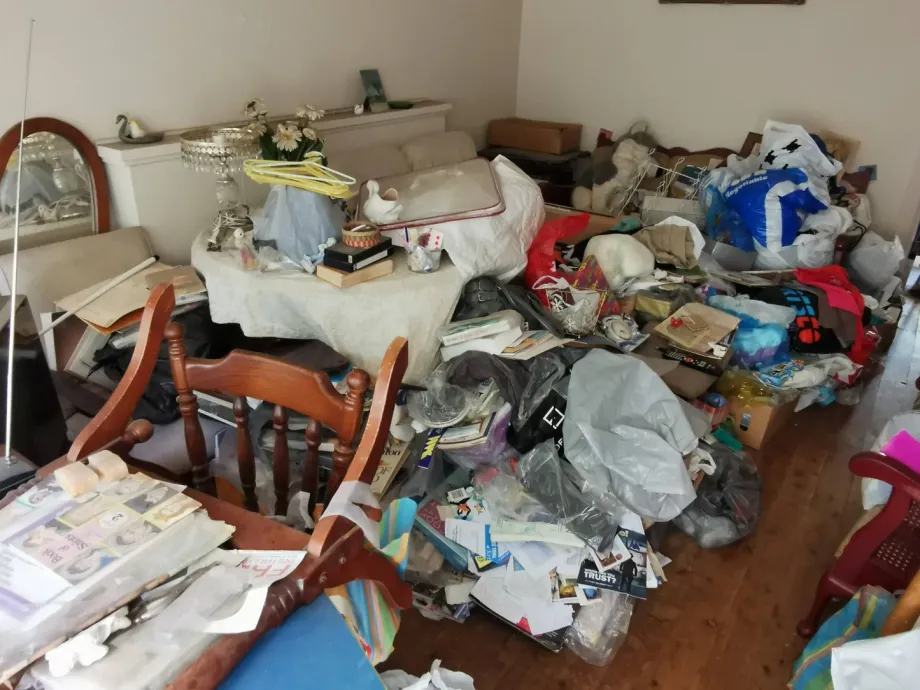
At this stage the home is actually cleared: belongings are sorted, valuables have already been handled separately, and the home is cleaned if needed to sale or handover condition. Read more about the full process in our article estate clearing step by step.
6. Dividing the estate or selling the home
Once the home is empty and clean, beneficiaries can move forward with a sale, renting it out, or dividing the estate, depending on what’s been decided. An empty, clean home is usually faster and easier to sell or hand over.
Checklist: the general order
- Death certificate and official notifications
- Funeral arrangements
- Preparing the estate inventory and record of heirs
- Going through valuables and documents
- A joint decision among beneficiaries to clear the home
- Clearing the home and any final cleaning needed
- Selling, renting out, or dividing the home
When the order doesn’t go in a straight line
In reality, many of these steps happen partly in parallel, and that’s not a problem. For example, clearing can often start before the estate inventory is finished, as long as beneficiaries agree and the belongings don’t have any particular bearing on the inventory.
If you’re unsure at what point your own situation should move forward, we’re happy to help you map out a timeline — including when beneficiaries live in different places, see estate clearing from a distance.